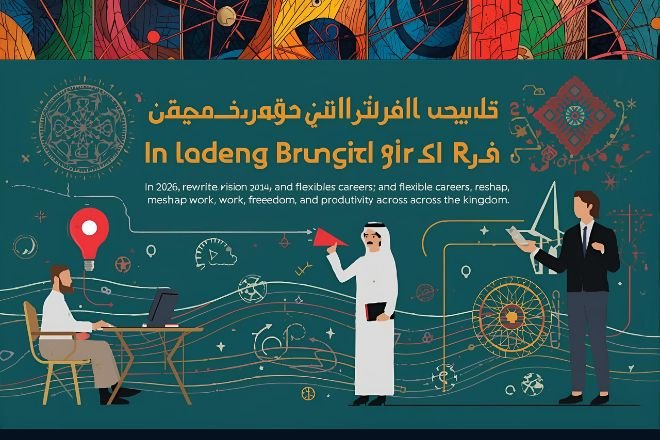
Morning traffic in Riyadh still hums, but the city’s workday has slipped its old routine. Some people start at Fajr and finish by noon. Others split the day—client calls after Dhuhr, deep work at night. A designer in Al Olaya reviews a brand guide from home; an operations lead in Al Khobar checks a dashboard before school drop-off. In 2026, the nine-to-five isn’t gone, but it is no longer the default.
Table of Contents
ToggleOutput Over Office: The Quiet Rule of 2026
The shift didn’t arrive with one big announcement. It arrived with small, durable changes: better internet, cleaner payment rails, tools that make performance visible. Managers care less about chairs filled and more about work shipped. If you want the skills behind this change, the routes in AI Education show how people upskill in weeks, not semesters.
How Workweeks Are Being Redesigned
- Split weeks: salaried role Sun–Tue, project work Wed–Thu.
- Early starts: deep work 6–11 a.m., errands and family after Dhuhr.
- Client windows: fixed call blocks to avoid “always on” pings.
- Season rhythm: lighter in Ramadan, heavier pre-holiday—see Saudi Public Holidays when planning sprints.
Scenes From the Ground (Not Slides)
Jeddah, Tuesday 10:15 a.m. A copywriter sends a bilingual product page, then heads to a quick pickup near the Corniche. “Afternoons are for errands. Work resumes after Asr.”
Dammam, Thursday 8:40 p.m. A project engineer reviews site photos on a family iPad, annotates them, and signs off. Ten minutes, done.
Riyadh, Sunday 7:05 a.m. A team stand-up happens on a phone while a parent waits at a school gate. The meeting ends early—everyone has a board to check.
What Made Flex Work Stick
- Dashboards not guesswork: business metrics visible in one place.
- Reliable payments: less chasing, more doing.
- Legal clarity: licensing paths are simpler and faster.
The same automation that reshaped roles is reshaping hiring; see AI and Jobs in Saudi Arabia for how teams moved from manual updates to oversight.
New Roles You Didn’t See in 2019
- Workflow editor (turns messy processes into checklists and SOPs).
- AI prompt lead (keeps brand tone while speeding content ops).
- Remote ops partner (handles schedules, vendors, and SLAs across time zones).
- Micro-consultant (two-month upgrades for SMEs—billing, returns, reporting).
Common Snags—and Fixes That Don’t Break
Blurred hours: tie offline time to prayer and school runs. Mark it on shared calendars so clients don’t guess.
Isolation: pick one co-working day per week. Rotate locations near errands—use these lists to plan routes: Riyadh Malls, Shopping in Saudi Arabia.
Payment friction: deposits + milestones; one invoice system. Keep receipts in a single folder.
Scope drift: one-page brief with deadlines and edit rounds. If the goal changes, the price changes—written, calm, clear.
Why Offices Still Matter (Just Not Daily)
Offices are turning into places for alignment, not attendance. Quarterly planning, product testing, client demos—events with a purpose. The everyday grind has moved to where people actually get work done. City design is following; for the bigger frame, see Saudi Smart Cities.
Families, Flexibility, and the New Respect
Ten years ago, working from home sounded like under-employment. In 2026, a clear schedule and steady delivery earn trust. Parents who shifted to hybrid roles talk about hours gained, not hours lost. Young professionals keep multiple income lines to stay resilient.
How Companies Are Adapting Without Losing Control
- Measure outcomes weekly; keep meetings short.
- Publish a “how we work” page—when to ping, how to hand off, what “done” means.
- Offer two tracks: office-first and hybrid. Let performance pick winners.
Linking Skills to Work That Pays
Upskilling works when it’s tied to a real task. A data sprint improves a monthly report. A prompt-writing module fixes content review time. Keep it small, then keep it going. If you need a starting point, the paths in AI Education translate cleanly to on-the-job value.
Where People Actually Work Now
Not just at home. Campus corners. Library tables. Quiet cafés near metro stops. Quick trips between coastal hubs—our note on Jeddah ↔ Makkah shows how travel time becomes planning time.
Red Lines That Protect Energy
- No messages after a set hour unless pre-agreed.
- One day each week without calls.
- Batch admin: invoices at noon, updates before Maghrib.
What This Means for 2027 Hiring
CVs will show skill stacks, not just job titles. Teams will hire for judgment, not geography. People who can set boundaries and still ship will lead. The rest will keep meetings alive but products late.
Frequently Asked Questions
Is the nine-to-five finished in Saudi Arabia?
No. It still fits some sectors. What’s changed is the choice—hybrid and split-week setups are normal, and output matters more than seat time.
How do managers keep standards without full-time office hours?
Clear briefs, public task boards, weekly targets, and short check-ins. Dashboards replace guesswork; people keep their focus.
What skills matter most for flexible work?
Communication, schedule discipline, and a stack that saves time (basic data, prompt craft, documentation). For routes that work, see AI Education.