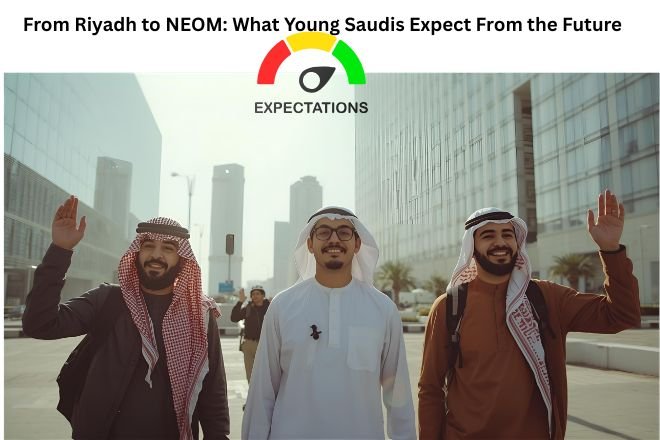
It’s evening on Riyadh’s Tahlia Street. A group of students sit under café lights, talking not about the past but what’s next—AI, remote jobs, renewable cities, and NEOM. For Saudi youth, the future isn’t a distant dream; it’s a project already in motion. The conversation reflects a country remapping its goals while its youngest generation quietly sets its own expectations.
Table of Contents
ToggleThe Generation That Grew Up With Vision 2030
Those who were teenagers when Vision 2030 launched are adults now. They’ve seen reforms change classrooms, entertainment, and even daily transport. Their optimism doesn’t come from slogans—it comes from evidence. The job market, once defined by government posts, now includes startups, creative work, and hybrid careers shaped by tech. Our earlier post on AI and Jobs in Saudi Arabia shows how automation is becoming an ally, not a threat.
Why NEOM Symbolizes More Than a City
For many, NEOM isn’t just a mega project; it’s a metaphor. It represents proof that Saudi Arabia can lead in design, tech, and sustainability. The Line, Oxagon, and Trojena give young professionals the sense that innovation can exist at home, not only abroad. Architecture students study NEOM renderings in class; coders watch the job boards closely. Even skeptics admit the ambition is reshaping what’s possible.
Expectations From Work and Life
When asked what they want most, young Saudis mention three things: freedom of choice, balance, and visibility. They want careers that allow creativity without sacrificing faith or family time. They expect flexibility—the kind explored in The Great Work Shift 2026—but they also crave belonging. They see work as part of life, not life itself.
Digital Confidence and New Ambitions
Gen Z in Saudi Arabia moves fluently between Arabic and English, code and culture. They trade NFTs and design mobile apps, run small e-commerce stores, and join hackathons. Tools once imported now feel native. With free online learning, many pick up new skills every few months. The effect is visible: LinkedIn profiles with titles like “Data Analyst, Freelancer, and Founder.”
Education, once formal and linear, has become modular. The programs described in AI Education prove how short courses can upgrade entire careers within weeks.
Money, Housing, and Real Life Goals
Dreams still include owning homes, but location priorities changed. Some prefer smart apartments over villas. Co-living spaces near universities and business hubs feel more flexible. For young professionals, digital stability often ranks above physical space. Many budget consciously—see our breakdown in Inside Saudi Wallets to understand how city costs shape lifestyle choices.
Women at the Center of Change
Women lead startups, manage teams, and teach tech courses. What used to be exceptional now feels normal. Families encourage ambition across genders. Riyadh cafés often host small networking circles where young women pitch digital businesses to mentors. Their participation reflects quiet confidence, not novelty.
Entertainment, Identity, and Expression
Concerts, film festivals, and esports events create shared ground between global and local. The creative economy is expanding fast, especially in Jeddah and Diriyah. For many youth, expression is tied to contribution—designing, filming, and coding their version of Saudi modernity. They don’t reject tradition; they remix it.
Challenges Beneath the Optimism
- Job competition: A degree no longer guarantees a role; skills do.
- Housing affordability: Rent climbs faster than entry-level pay.
- Work-life balance: Hustle culture still tempts burnout.
- Uncertainty: Global tech layoffs remind youth how fragile startups can be.
These concerns don’t erase confidence; they ground it. Many see uncertainty as part of growth, not failure.
How Youth Define “Success” Now
Success no longer equals status alone. It’s measured in autonomy, purpose, and contribution. A 27-year-old developer might skip a high salary for a mission-driven company; a 22-year-old designer may launch her own brand instead of joining a firm. Success means relevance—and the ability to choose.
“We don’t want to leave,” a 24-year-old engineer in NEOM said. “We want to build something worth staying for.” That sentence captures the national mood better than any survey.
Where Cities and Ambitions Meet
Riyadh remains the testing ground for tech and finance; Jeddah leads culture and design; NEOM represents the future. Together they form a map of opportunity—each city reflecting a different energy. As projects expand, intercity mobility grows too. Improved transport between hubs, like those explored in Jeddah–Makkah Routes, connects talent with new frontiers.
Why the Future Feels Tangible
Saudi youth see cranes, campuses, and coworking spaces—not just promises. They live inside the transformation every day. The new standard is speed: announcements followed by execution. This visible progress shapes their belief that change here is not temporary.
What They Still Ask For
- More affordable housing near innovation zones.
- Fairer hiring for new graduates—skills over seniority.
- Creative funding for startups outside major cities.
- Consistent mentorship and internships to link study with work.
Looking Toward 2030 and Beyond
The next generation won’t just inherit Vision 2030; they’ll rewrite it. They expect tech to stay human, jobs to stay flexible, and progress to include everyone. From Riyadh’s towers to NEOM’s desert skyline, their expectations sound simple but carry weight: “Keep the momentum, keep it fair, and keep it ours.”
Frequently Asked Questions
Why do young Saudis see NEOM as a symbol of the future?
Because it represents innovation built at home—mixing sustainability, design, and opportunity within Saudi borders.
How has Vision 2030 changed youth expectations?
It shifted focus from job security to creativity and self-direction. Youth now expect to choose careers that fit personal and national goals.
Are young Saudis optimistic about the economy?
Yes. Despite challenges like housing and competition, most see economic diversification and tech investment as proof of real opportunity.